Embracing volatility
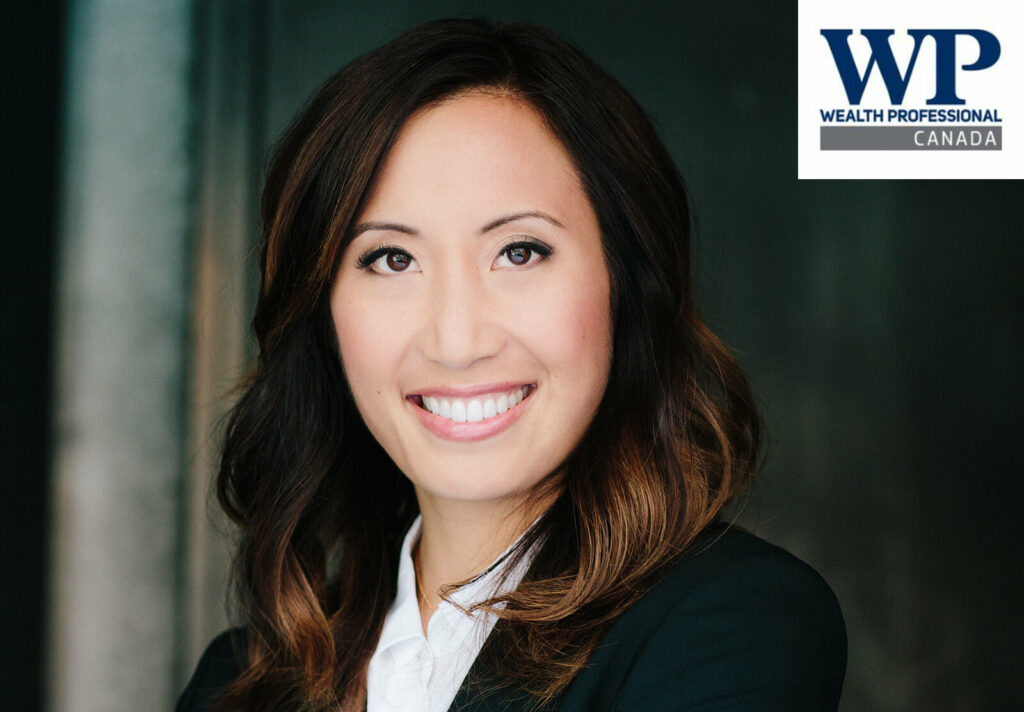
While some portfolio managers may fear volatile times, Maili Wong sees them as an opportunity to buy companies on sale and enhance quality
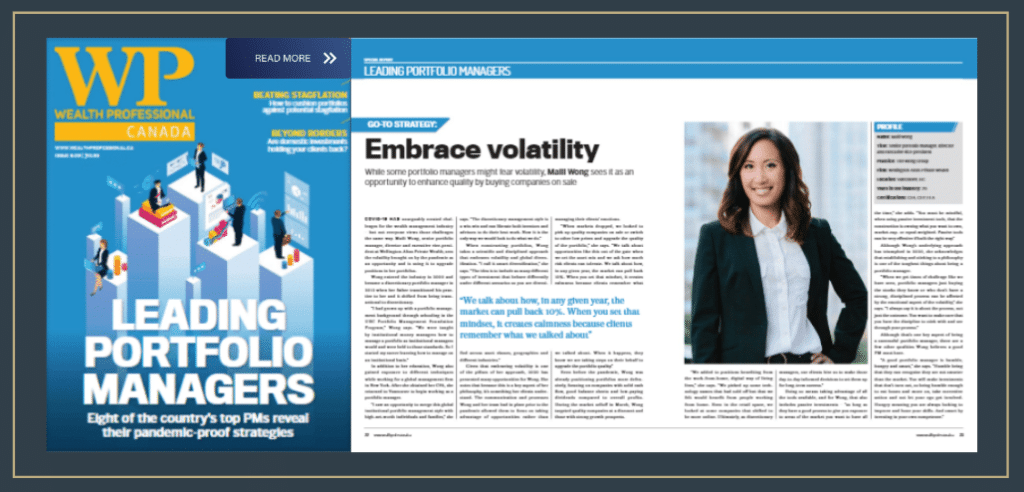
This issue of Wealth Professional Magazine spotlights 8 of the country’s leading portfolio managers and their pandemic-proof strategies.
Click here to read this 2 page article on Maili Wong’s philosophy on embracing volatility and managing risk throughout market cycles and access the full digital magazine by Wealth Professional.
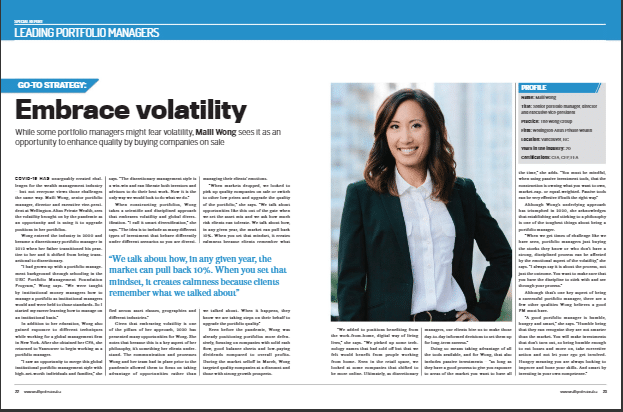
Wealth Professional Magazine article Embracing Volatility
The challenges that COVID-19 has created for many in the wealth management industry is just another to add to the list. Yet not everyone views the challenges the same. For Maili Wong, senior portfolio manager, director and EVP at Wellington-Altus Private Wealth, she has seen the volatility as opportunity and is now upgrading positions in her portfolios because of it.
Wong entered the industry in 2000 and became a discretionary portfolio manager in 2012 as the practice she was part of, with her father, was not only transitioning to her but from a more transactional one to discretionary. “I had grown up with a portfolio management background through schooling in the UBC portfolio management foundation program. We were taught by institutional money managers how to manage a portfolio as institutional managers would and were held to those standards. So, I started my career learning how to manage on an institutional basis.”
In addition to her education, Wong also gain more exposure to different techniques while working for a global management firm in New York. After she obtained her CFA, she returned to Vancouver to begin working as a portfolio manager.
“I saw an opportunity to merge this global institutional portfolio management style with high-net-worth individuals and families. The discretionary management style is a win/win and can liberate both investors and advisors to do their best work. Now, it is the only way we would look to do what we do.”
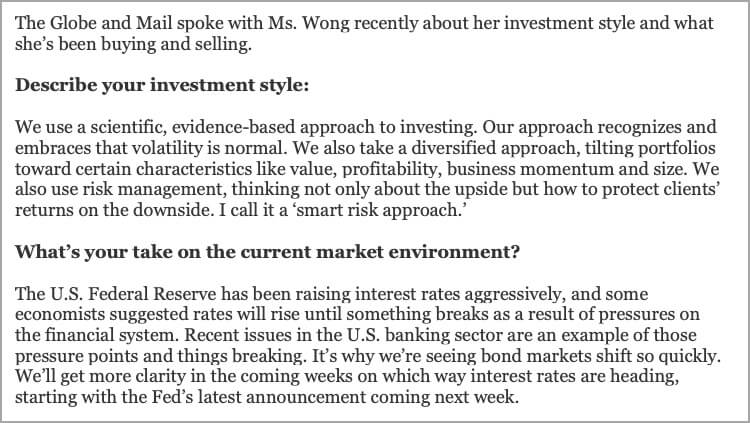
Wong describes her approach as three-fold. She takes a scientific, disciplined approach; embraces volatility; and globally diversifies. “I call it smart diversification. The idea is to include as many different types of investment, that behave differently under different scenarios, so you are diversified across asset classes, geographies and different industries.”
With one of her pillars being embracing volatility, 2020 presented many opportunities for Wong. She notes that because it is rooted in her approach, it is something that her clients understand. While other portfolio managers’ clients may have been panicking, because of the communication and processes Wong and her team had in place, it allowed them to focus more on opportunities than managing client emotions. “When markets dropped, we looked to pick up quality companies on sale or switch to other low prices and upgrade the quality of the portfolio. We talk about opportunities like this out of the gate when we set the asset mix and we ask how much risk clients can tolerate.
“We talk about how, in any given year, the market can pull back 10%. When you set that mindset, it creates calmness because clients remember what we talked about. When it happens, they know we are taking steps on their behalf to upgrade the portfolio quality.”
Before the pandemic, Wong says she was already positioning the portfolios more defensively, focusing on companies with solid cash flows, good balance sheets and low paying dividends compared to overall profits. When the markets sold in March, Wong sought to buy into quality companies on sale or those with strong growth prospects. “We added to positions benefiting from the work-from-home, digital way of living lives. We picked up some technology names that had sold off, but that we felt would benefit from people working from home. Even in the retail space we looked at some companies that shifted to be more online. Ultimately, as discretionary managers, our clients hire us to make those day-to-day informed decisions to set up them up for long term success.”
Part of setting up that long-term success is taking advantage of all the tools available. For Wong, that includes passive investment as well. “As long as they have a good process to give you exposure to areas of the market you want to have all the time. You must be mindful, when using passive investment tools, that the construction is owning what you want to own, market cap or equal weighted. Passive tools can be very effective, if built the right way.”
Wong saw 2020 as more of an opportunity than a challenge but it comes back to her underlying philosophy. She says that establishing and sticking to that philosophy is one of the toughest things portfolio mangers need to deal with.
“I would say the biggest challenge is making sure you have an investment philosophy and stick with. When we get times of challenge, like we have seen, portfolio managers just buying the stocks they know or who don’t have a strong disciplined process, can be affected by the emotional aspect of the volatility. I always say it is about the process, not just the outcome. You want to make sure that you have the discipline to stick with and see through your process.”
Having that process is one thing Wong says will create a successful portfolio manager. Yet there are a few other qualities she outlines. “A good portfolio manager is humble, hungry and smart. Humble being that they can recognize they are not smarter than the market. You will make investments that don’t turn out, so being humble enough to cut losses and move on, take corrective action, and not let your ego get involved. Hungry, meaning you are always looking to improve and hone your skills. And smart, by investing in your own competence.”
Article written by Darren Matte, Wealth Professional Magazine November 2020 edition


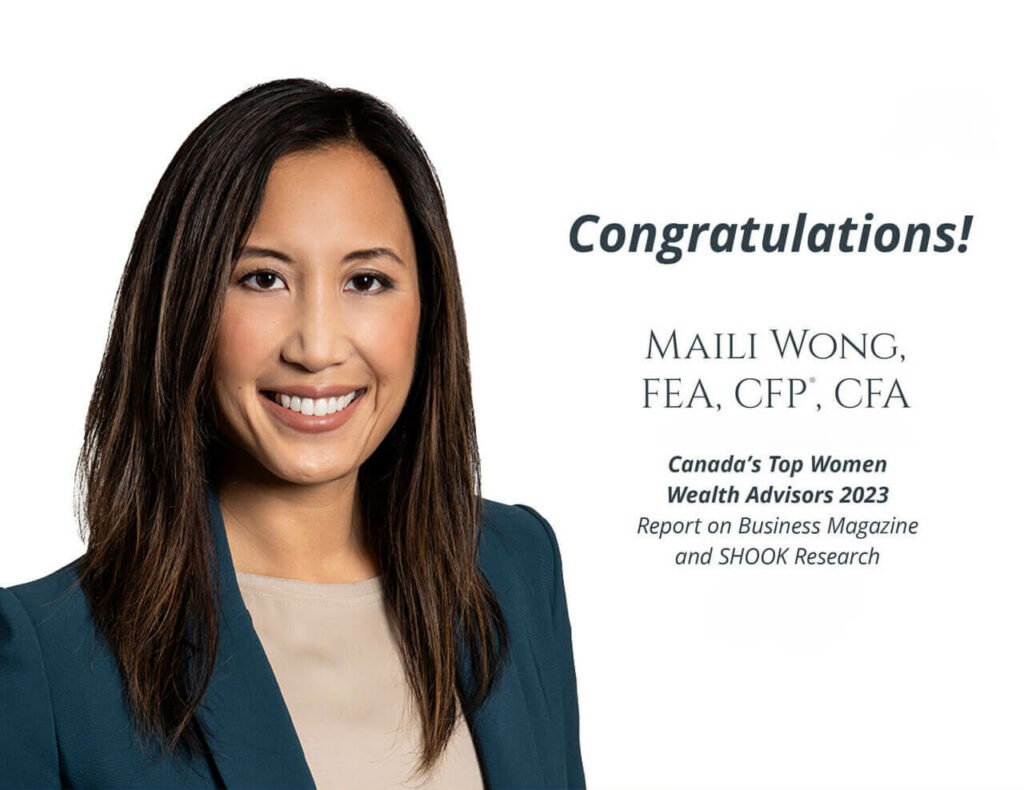
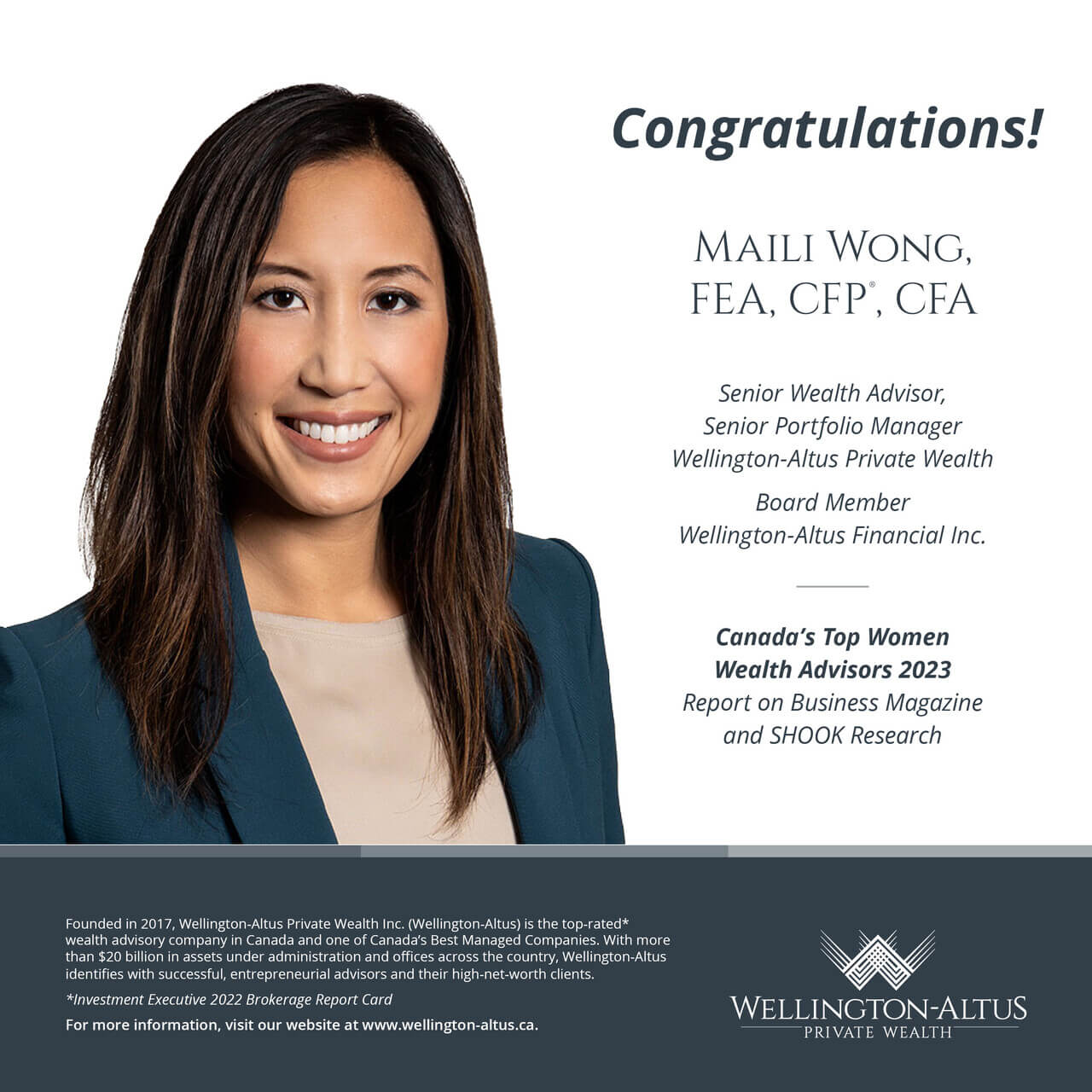





 ver, BC – We are pleased to announce that Maili Wong, CFA, CFP, FEA, First Vice-President and Portfolio Manager, and Best-selling author of Smart Risk: Invest like the Wealthy to achieve a Work-Optional Life has been named one of
 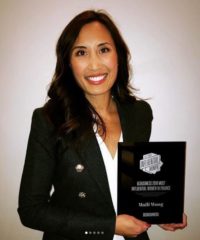 “I am humbly honoured to receive this recognition from BCBusiness, and offer congratulations to all the other incredible women for their contributions as leaders in finance. Thank you to BCBusiness for this recognition as we continue to inspire generations to lead.” says Maili.